On this page
Aquascape
How to choose a suitable light
As is well known, sunlight is indispensable for life on Earth, and all the more so for plants. Without light, plants cannot photosynthesize and cannot sustain themselves. When keeping aquatic plants indoors, professional lighting is needed in place of sunlight so that photosynthesis can proceed. The intensity and spectrum of the light directly affect photosynthesis in aquatic plants, so a suitable light source is vital for a planted tank.
LED lights. A lighting system that has become very common in aquariums in recent years, suited both to keeping ornamental fish and to aquatic plants. They are bright and use little power, punch through the water, and stay small; the housing is thinner than older fixtures and fits a current look, so LED is the direction planted-tank lights are heading. Making an LED that actually produces the light aquatic plants need still takes real technique, and planted-tank LED lights are still being refined.
On home planted tanks, the lights you see now look like this:
- Clip-on: clamps to the rim, common on nano tanks. Coverage is short, and a crooked clamp moves the hotspot.
- Stand / legs: sits across the top. The usual home planted-tank light. Length is easy to match to the tank.
- Pendant: hangs above the tank. Height is adjustable and the spread is more even. You need a place to hang it, and a way to hide the cable.
The form mainly decides whether the length matches the tank, whether you can change the height, and whether the bright spot stays in the middle.
Why buy a light?
Plants use the light that reaches the leaves. Planted-tank talk usually means PAR (photosynthetically active radiation), in µmol/m²/s, measured at the substrate. A light can look bright to the eye and still be thin down there.
Light intensity. Plants need light for photosynthesis, so how strong should it be? The benchmark is the intensity at which photosynthetic uptake of carbon dioxide balances the carbon dioxide released by respiration. An estimate: fixture watts = water volume in liters × 0.7. A standard 120 cm × 50 cm × 50 cm tank holds 300 L, so the total power suited to that tank is about 300 × 0.7 = 210 W. This is only a reference and has to move with the tank: a tank of sun plants and a tank of shade plants do not want the same wattage. Two fixtures of the same wattage can still put different light on the floor, and the gap grows as the water gets deeper.
Buying a light mainly means checking these two things at once:
- Intensity: about 20–40 at the substrate keeps Anubias, Java fern, Cryptocoryne, and moss; about 40–90 grows most green plants, and a carpet has a chance to fill in; about 90–150 is for reds and when you want color and density. Around 200 is more than most home tanks need, and upkeep gets tight. Without CO2, carbon runs out first, so about 20–60 is the easier band; with CO2, start around 60–90 and go up once the plants are steady. These are rough figures. Hang height and water depth move them.
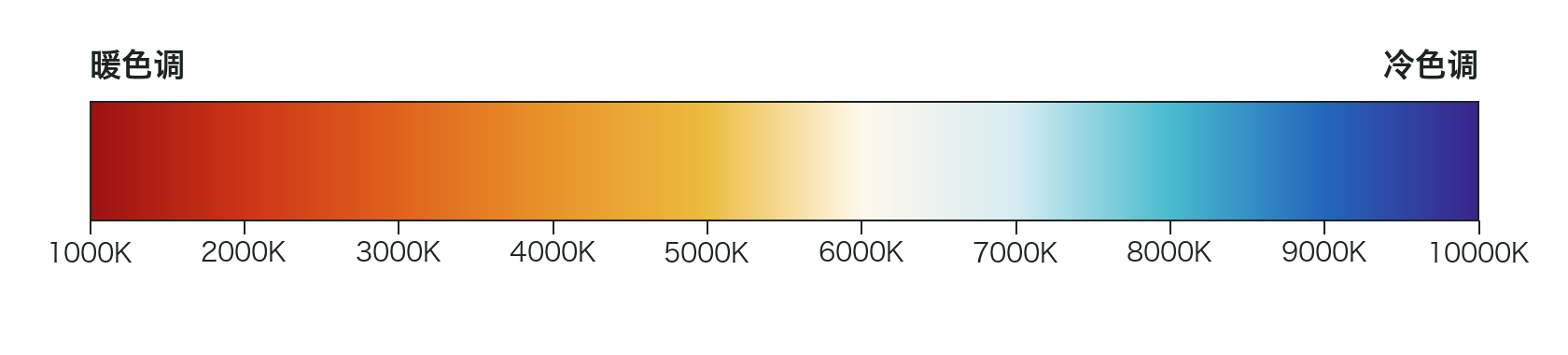
- Spectrum: For viewing, 6500 K is normal daylight. A lower color temperature helps red plants stand out; a higher one helps green plants stand out. Plants use roughly 400–700 nm and absorb red and blue most. White, or white sold as full spectrum, is enough for green plants and a low-tech tank; colors stay flatter. White plus adjustable red, green, and blue (often written WRGB) keeps the red and blue plants use, and the tank still looks like daylight. On shelves in China, Chihiros and Week Aqua bars and pendants often take this route—as examples of the type. A purple grow bar turns the tank into a shop counter, and it is harder to see whether the plants are actually well. Reef lights are very blue, often past 10,000 K; on a freshwater scape, stone and plants both go cyan.
Hours per day are a keeping decision, and a timer is enough. A brighter fixture is not how you buy a longer day.
What do you check on a light?
Clip-on, stand, or pendant, the purchase comes down to the same items. Match length and height to the tank, then look at substrate intensity and spectrum.
| Item | Job | Watch |
|---|---|---|
| Coverage | Bar length near the long side, light across the whole floor | On a 60 cm tank, a light only about 30 cm long leaves both ends dimmer than the middle. A little short is workable; half the length is not even. Hung higher, the beam spreads and the substrate gets weaker; close to the water or on the rim, the center is brighter and the edges fall off. A dimmer lets height and brightness meet. The same fixture over a 30 cm tank and a 45 cm tank does not deliver the same light to the floor. |
| Intensity | Substrate PAR; watts as liters × 0.7, a reference only | A 120 cm × 50 cm × 50 cm tank is about 300 L, so the reference power is about 210 W. Sun-plant and shade-plant tanks need different totals. Bands are in the section above. A PAR chart is the useful one. |
| Spectrum | Daylight-like white, or white plus adjustable RGB | Treat 6500 K as normal daylight. A lower color temperature helps red plants stand out; a higher one helps green plants stand out. An all-purple bar, or a reef-blue light, is not the freshwater planted light this article is choosing. |
Spectrum. Dispersion is the splitting of mixed light into single colors. Sunlight is made of red, orange, yellow, green, cyan, blue, and violet, and each color has its own wavelength. Aquatic plants do not photosynthesize with the same efficiency under every wavelength. They absorb red and blue most, and the other colors less.
Color temperature. A measure of the color of a light source. Heat a black body from absolute zero (−273°C); when the color it emits matches a source, that temperature is the source’s color temperature, CCT, in kelvin (K). As it heats, the body goes from black to red, then yellow, white, and finally blue. Put simply, a lower color temperature tends toward red and looks warm; a higher one tends toward blue and looks cool.
Tank size and scenario lookup
Match the studio sizes: nano ~20–30 cm, small 30–60, medium 60–90, large 90–120, XL 120+.
| Tank size | Shade plants / low-tech | Greens, or a carpet | Reds, and color |
|---|---|---|---|
| Nano / small | Clip-on or a short stand. About 20–40 at the substrate | A stand whose length is close to the tank, with a dimmer. About 40–90. HC Cuba and Monte Carlo usually want CO2 as well | Stand or a small pendant, dimmable. About 90–150, with fertilizer and water changes keeping up |
| Medium (~60–90 cm) | A stand. A light of about 30 cm will not cover a 60 cm tank | Stand or pendant, dimmable. About 40–90 | Pendant or a long stand, dimmable. About 90–150 |
| Large / XL | A long stand or a pendant. If the bar is clearly shorter than the tank, both ends stay dark | A pendant is easier to set the height. About 40–90 | Pendant, dimmable. About 90–150. Around 200 is more than most home tanks need |
- Without CO2, carbon runs out first. About 20–60 at the substrate keeps Anubias, Java fern, and crypts; a stronger light often grows algae faster than plants. With CO2, start around 60–90.
- Which form you use depends mainly on whether the length covers the tank, and whether height and brightness can be adjusted.
- Set the hours with a timer. A stronger fixture is not how you buy a longer day.
Things to watch
- Buying by watts or “suitable liters”: The watt figure on the box does not match light at the substrate. Length, dimming, and a PAR reading on a similar tank matter more.
- HC Cuba or Monte Carlo under a shade-plant light: the foreground stays thin, especially against the substrate. Carpets usually want CO2 as well. A brighter bulb alone does not finish the job.
- A bar much shorter than the tank: both ends stay dark, and the layout crowds the middle.
In the aquascape studio, set the tank size first, then match length and intensity from the table. Swapping the light there only shows the composition, not a measured fixture. For choosing the tank itself, see how to choose a tank. Details worth adding? Tell us via Contact.
2026-10-03